Kosovo closes AKI fund probe citing limitations, then arrests commentator Fatmir Sheholli for suspected espionage; court orders one month’s detention under Article 124 following investigation.
Oct – 11 – 2025
On the afternoon of 7 October 2025, a small, insistent story in Pristina began to gather force. KALLXO.com reported¹ that Kosovo’s Special Prosecution had closed an investigation into a “special fund” at the Kosovo Intelligence Agency (AKI), a discreet budget line allegedly spent between 2017 and 2020 by three former AKI directors with scant documentation. Roughly two million euros, the agency’s own internal inspector suggested, had been disbursed with no clear record of who received the money or why. Prosecutors cited relative statute of limitations for two of the former directors and insufficient evidence for the third. AKI, unusually blunt in public, said the evidence of abuse was “clear and grounded.”
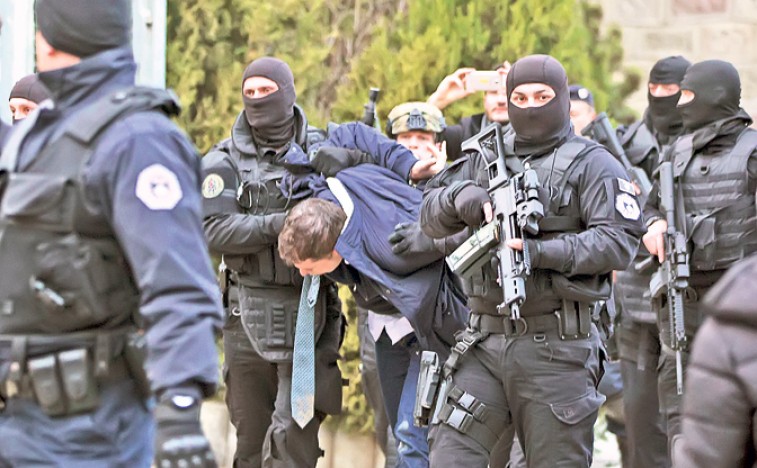
Two days later, the story burst into the open with a jolt. Kosovo’s acting interior minister, Xhelal Sveçla, announced that police², working closely with the AKI and prosecutors, had arrested the public commentator Fatmir Sheholli on suspicion of espionage. The minister’s language was stark, almost prosecutorial, promising an “uncompromising” pursuit of anyone working “for Serbia and against Kosovo.” The Special Prosecution followed with a formal note³: after months of inquiry, investigators had moved, seizing materials in a several-hour search of Sheholli’s flat and ordering his detention for 48 hours.
By 10 October, prosecutors had asked a judge to impose pre-trial custody. That evening the Basic Court of Pristina agreed⁴, ordering one month’s detention and endorsing the Special Prosecution’s account that the suspected offence fell under Article 124 (“Espionage”) of Kosovo’s Criminal Code, a provision that covers, among other acts, entering the service of a foreign intelligence organisation or collecting and transmitting sensitive information to it.
Official statements from Kosovo’s Minister of Internal Affairs Xhelal Sveçla, the Special Prosecution Office, and the Basic Court of Prishtina regarding the arrest and one-month detention of F.SH., suspected of espionage. The institutions emphasize the seriousness of the case, citing threats to national security and constitutional order.
Official statements from Kosovo’s Minister of Internal Affairs Xhelal Sveçla, the Special Prosecution Office, and the Basic Court of Prishtina regarding the arrest and one-month detention of F.SH., suspected of espionage. The institutions emphasize the seriousness of the case, citing threats to national security and constitutional order.
Upgrade to paid
What made the stories feel knitted together was the overlap of names. In July 2024, the AKI sent prosecutors an internal report alleging that money from its “special fund” had, in some cases, been paid to unidentified recipients or for work that was never documented. In other cases, the recipients were identified. The agency’s chief inspector later told reporters that one of those named was the commentator who has now been arrested. The public record shows that Fatmir Sheholli has acknowledged working with the AKI in the past⁵, but he has declined to discuss amounts or specific tasks. According to the inspector, payments linked to him reached the mid–six-figure range. Prosecutors subsequently closed the alleged fund-misuse case citing the statute of limitations for two former AKI directors and insufficient evidence for the third yet they continued to pursue a separate line of inquiry, the espionage suspicions that are now before the court⁶.
What, precisely, the state believes it can prove in the espionage matter remains sealed behind the usual cautions of an ongoing investigation. The prosecutors’ public filings and the minister’s statement sketch a broad picture, a months-long inquiry coordinated between police and intelligence services, a raid that removed boxes of material from a central Pristina address, and an assertion unproven in court at the time of writing that the suspect acted at the direction of a senior officer of Serbia’s Security Information Agency (BIA). The court’s detention ruling⁷ cited the gravity of the alleged offence, the risk of flight, potential interference with witnesses, and the possibility of repetition. None of this establishes guilt. It does, however, signal the state’s confidence that the case has moved past preliminary suspicion into something more assertive.
The chronology matters. On 7 October, KALLXO.com’s long read on the AKI “special fund” argued that internal inspectors could not find evidence that the millions dispensed yielded usable intelligence, it reproduced time-stamped extracts on the alleged decision-making that doubled a budget for informants and extended an operation with thin justification. On 9 October, cameras captured the arrest of one of the file’s named interlocutors. On 10th October, prosecutors sought custody, and the court concurred. None of these steps proves the thesis of any particular outlet or official. Together, though, they show a state moving through the gears administrative inspection, prosecutorial triage, public-order action, and judicial supervision in a country where, for much of the post-war period, the lines between party, security service and business have often felt blurred.
The law, too, supplies a frame. Article 124 of the 2019 Criminal Code⁸ treats espionage as a serious offence, penalties scale with circumstance, but the core conduct serving a foreign intelligence service or delivering protected information sits among crimes against constitutional order and state security. Prosecutors invoked paragraph 3 in public notices surrounding the arrest. The evidentiary bar in such cases is exacting, much will turn on the chain of custody for seized materials, provenance of communications, and the credibility of any human sources. The court’s one-month detention order, standard in sensitive national-security inquiries, buys time for that work.
Context, inevitably, intrudes. Over the past decade and a half, Kosovo’s political memory has been haunted by allegations, untested or unresolved in court that an underground intelligence structure known as SHIK, seeded in the late 1990s from the ranks of the Kosovo Liberation Army and aligned with what became the Democratic Party of Kosovo, wielded extra-legal power and may have been connected to post-war political violence. In 2009, the self-confessed assassin Nazim Bllaca publicly alleged that SHIK orchestrated killings of rivals⁹, EULEX opened cases, made arrests and secured limited convictions linked to specific crimes, while SHIK’s former chief, Kadri Veseli, denied the organisation ever killed anyone. Parliament flirted with an inquiry in 2012 but never saw it through. The fog never fully lifted.
In the aftermath, questions over the integrity of Kosovo’s justice system deepened. When the European Union Rule of Law Mission in Kosovo (EULEX) was itself exposed in 2014 to be mired in a corruption scandal, the credibility of its earlier investigations including those stemming from Nazim Bllaca’s testimony came under renewed scrutiny. The revelations, triggered by whistleblower Maria Bamieh’s allegations that senior EULEX officials had accepted bribes and obstructed prosecutions¹⁰, shook public trust in the mission’s impartiality. These exposures laid objective grounds for suspicion that entrenched political or intelligence-linked structures, including remnants of SHIK, may have influenced judicial outcomes or compromised sensitive cases. In that light, the limited convictions following Bllaca’s confessions appeared not merely as a failure of evidence, but as a reflection of systemic dysfunction where justice, politics, and clandestine power often intersected in post-war Kosovo.
Into that fog the public figure of Fatmir Sheholli has stepped repeatedly. In media appearances in recent years, he said that, before 1999, he worked within Serbia’s State Security (UDB), and separately that during the NATO campaign he worked at “AS” Television, owned by the Serbian politician Zoran Andelkovic¹¹. After the war, he has said, he cooperated with Kosovo-side structures and later with the official intelligence agency, he has also said he worked with SHIK. These are his statements, made on air and reported by outlets at the time, they provide colour, not verdict¹².
What is solid now is the sequence, an internal AKI inspection that raised uncomfortable questions, a prosecutorial closure on the inspection file with a split rationale, an arrest for an entirely different alleged offence, a judge’s decision that the suspicion, at minimum, merits custody while evidence is sifted. It is tempting in Kosovo to fit events to priors about security services old and new. The sober thing is to watch the docket.
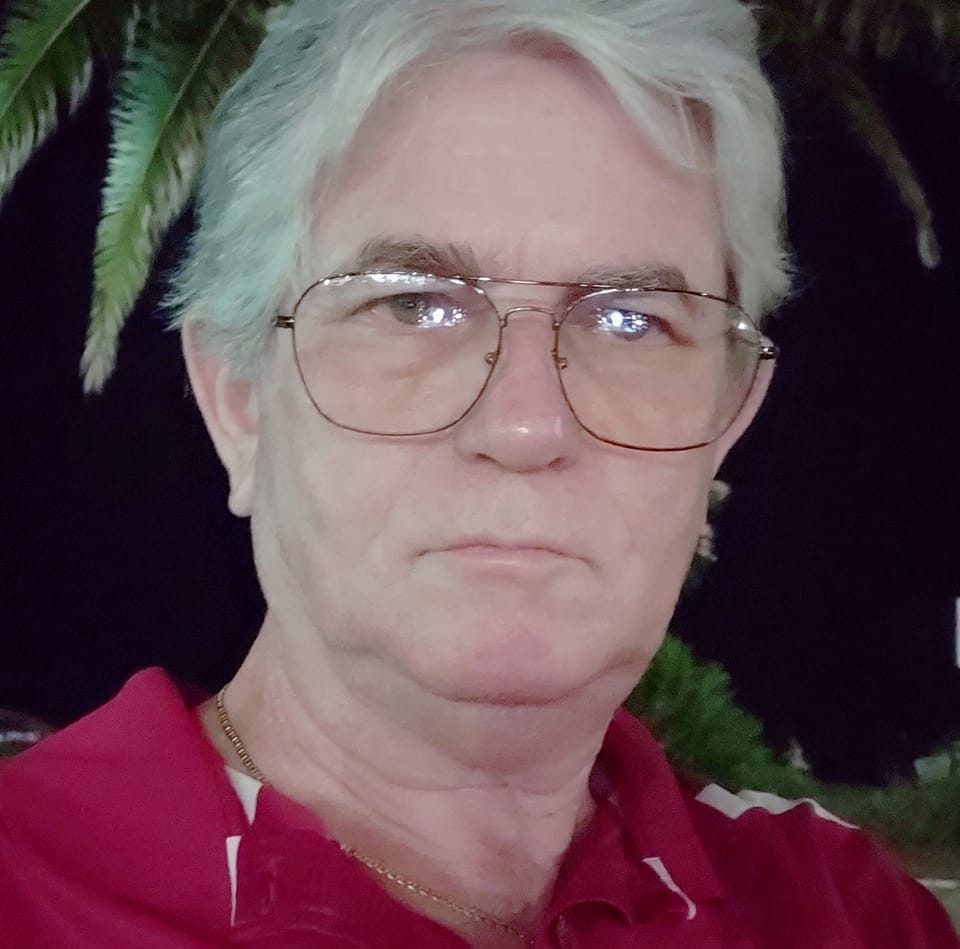
Who is Fatmir Sheholli?
In the Kosovo public sphere he has, for years, inhabited an ambiguous position, a civil-society figure fronting an institute for inter-ethnic relations, a television commentator with ready access to studio sofas, a man whose name crops up, again and again, at the intersection of media, intelligence and politics. In interviews, he has said that he worked in Serbia’s State Security in the early 1990s and later in Kosovo-side structures, including SHIK, critics have long used those admissions to question his loyalties, while he has depicted himself as someone who, at different moments, served what he saw as Kosovo’s interests from inside adversarial systems. He has publicly acknowledged work at “AS” Television during the NATO air campaign, an outlet tied to Serbian political power at the time and later said he cooperated with the AKI. All these elements are on the record in his own voice or in contemporaneous reporting. None, on its own, establishes espionage under Kosovo law. That question now sits with prosecutors and judges.
A final note on claims and counter-claims that swirl around him, our understanding is that photographic material exists that, when considered alongside interviews with vetted European sources, suggests a close association between Sheholli and figures linked to SHIK. Those sources allege that SHIK, an entity widely accused by opponents and some investigators of bearing responsibility for a share of post-war political violence recruited and relied on him. SHIK’s former leadership has repeatedly denied involvement in murder¹³, and no court has established that the organisation ordered a campaign of assassinations. The photographs and sourcing referenced above have been reviewed with care, they support an inference of proximity and cooperation, not a legal conclusion of culpability. In keeping with both journalistic standards and due-process norms, these remain allegations and context, not adjudicated facts.
What happens next will likely be quieter than the week that jolted Pristina, a forensic crawl through devices and documents, disputes over admissibility, a judge weighing the balance of public safety and personal liberty. Beyond the courtroom, the deeper test is institutional. A young state that has long hosted rumours about unaccountable power now has a chance through disciplined investigation, transparent charging, and measured public rhetoric to prove that it can handle its most sensitive cases by the book.

Shënim:
Redaksia, diplomacia. dk nuk e merr përgjegjësinë për pikëpamjet e autorit në shkrimin e botuar!
Respekt!